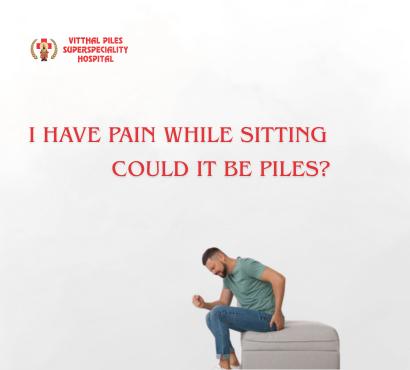
Most people don't think twice about sitting down. Whether it's during office work, driving, studying, travelling, or simply relaxing at home, sitting is a normal part of daily life. But when sitting becomes uncomfortable or painful, even routine activities can start feeling difficult. One common concern many people have is, "Doctor, I have pain while sitting. Is it piles?"
The answer is not always straightforward.
Pain in the anal or rectal region can occur for several reasons. While piles (also known as hemorrhoids) are a common cause, they are certainly not the only one. Conditions such as anal fissures, anal fistulas, infections, abscesses, muscle strain, or even prolonged constipation can all cause discomfort while sitting. Unfortunately, because many of these conditions affect a sensitive area of the body, people often hesitate to discuss them or seek medical advice. Instead, they wait, hoping the pain will disappear on its own.
Ignoring persistent pain, however, may allow the underlying problem to worsen. Early identification of the cause not only makes treatment easier but also helps prevent unnecessary complications and prolonged discomfort.
This article explains why sitting can become painful, how to identify whether piles might be responsible, what other conditions can cause similar symptoms, and when it is time to consult a medical professional.
Pain while sitting is not a disease itself; it is a symptom that signals something may be affecting the tissues around the anus or rectum. The discomfort may be mild, moderate, or severe depending on the underlying condition.
Some people describe the pain as:
The exact nature of the pain often provides valuable clues about what may be causing it. For example, someone with swollen external piles may feel discomfort mainly while sitting for long periods. In contrast, a person with an anal fissure often experiences intense pain during and immediately after passing stool. Understanding these differences helps doctors arrive at the correct diagnosis.
Yes—but not in every case.
Piles are swollen veins inside or around the anus and lower rectum. Similar to varicose veins in the legs, these veins become enlarged due to increased pressure over time. Internal piles generally develop inside the rectum and often cause painless bleeding rather than pain. External piles, however, form beneath the skin surrounding the anus and are more likely to become painful, especially if a blood clot develops within them.
Pain usually becomes noticeable when:
Many patients notice that the pain worsens after sitting continuously at work, during long drives, or while travelling.
Pain alone cannot confirm piles. However, when combined with certain symptoms, piles become more likely. Some common signs include:
Fresh blood on toilet paper or in the toilet bowl after passing stool is one of the most common symptoms.
Persistent itching may occur because mucus from prolapsing piles irritates the surrounding skin.
Some patients notice a soft lump near the anus that becomes more obvious after bowel movements.
Large internal piles may create a sensation that the bowel has not emptied completely.
External piles may become painful whenever body weight places pressure on the affected area.
One of the biggest misconceptions is assuming every anal pain is caused by hemorrhoids. In reality, several other conditions produce similar symptoms and may require entirely different treatment.
An anal fissure is a small tear in the skin lining the anal canal. Unlike piles, fissures usually produce severe, cutting pain during bowel movements. People often describe the sensation as passing broken glass. The pain may continue for several hours after using the toilet and can make sitting extremely uncomfortable. Constipation and passing hard stools remain the leading causes.
An anal fistula is an abnormal tunnel that develops between the inside of the anal canal and the surrounding skin. Symptoms often include:
Unlike piles, fistulas usually do not improve with home remedies and often require specialised medical treatment. People experiencing persistent discharge or repeated infections should avoid delaying medical consultation.
An abscess is a collection of infected pus around the anal region. It often causes:
This condition requires prompt medical attention because untreated infections can spread.
Sometimes the source of pain isn't the anus at all. People who sit for long hours, especially office workers, drivers, and students, may develop muscle strain around the pelvic floor or inflammation near the tailbone (coccyx). These conditions often become worse after prolonged sitting but improve with movement. Unlike piles, there is usually no bleeding or swelling around the anus.
Several everyday habits increase pressure around the anal region and contribute to anorectal problems. These include:
Passing hard stools repeatedly puts excessive strain on the veins around the rectum.
Desk jobs, long-distance driving, and sedentary lifestyles reduce blood circulation and increase pressure in the pelvic region.
Insufficient fibre makes stools harder and increases straining.
Not drinking enough water contributes to constipation and difficult bowel movements.
Pregnant women commonly develop piles because of hormonal changes and increased pressure from the growing uterus.
Extra body weight places additional pressure on pelvic veins.
Many people purchase over-the-counter creams after searching symptoms online. While temporary relief is possible, self-treatment may delay diagnosis of more serious conditions. For example:
Because several conditions share similar symptoms, proper clinical examination is the safest way to identify the actual cause.
Many people feel anxious about consulting a doctor for anal pain because they assume the examination will be painful or embarrassing. In reality, the consultation is usually straightforward, respectful, and focused on identifying the exact cause of your symptoms. The doctor will first ask questions about:
A gentle physical examination is often enough to diagnose external piles, fissures, or swelling. In some cases, the doctor may recommend additional tests such as anoscopy or sigmoidoscopy if internal piles or other rectal conditions are suspected. These investigations help rule out more serious causes of rectal pain or bleeding and ensure that treatment is directed at the actual problem.
If symptoms such as persistent pain, discharge, or recurrent swelling raise suspicion of an anal fistula, timely evaluation is important. Patients looking for a reliable fistula treatment hospital in Pune can benefit from consulting specialists experienced in diagnosing and managing complex anorectal conditions.
One of the biggest mistakes people make is assuming that every painful lump near the anus is piles. Since different conditions require different treatments, managing the underlying cause is far more effective than simply masking symptoms.
The treatment plan depends on the severity of the condition.
For early-stage piles, lifestyle changes are often enough to reduce symptoms. Doctors may recommend:
Many patients experience noticeable improvement within a few weeks when these measures are followed consistently.
When piles become larger, prolapse frequently, or continue to bleed despite conservative treatment, minimally invasive procedures may be advised.
Modern laser treatment for piles in Pune in Pune offers a less invasive option for selected patients. Laser procedures are generally associated with reduced bleeding, minimal tissue damage, and faster recovery compared with conventional surgery, although suitability depends on the individual's condition and the doctor's assessment.
Treatment focuses on allowing the tear to heal naturally while preventing further injury. Common recommendations include:
Ignoring fissures may lead to chronic tears that take longer to heal and occasionally require surgical treatment.
Unlike piles or fissures, fistulas rarely heal on their own. They usually require evaluation by a qualified colorectal surgeon or proctologist. Early treatment helps reduce the risk of recurrent infections and complications.
While home remedies should not replace professional medical advice, they can provide relief for mild symptoms and support recovery.
Fibre helps soften stools, making bowel movements easier and reducing strain on the anal region. Include foods such as:
Adults should aim for adequate fibre intake every day rather than relying on occasional dietary changes.
Water plays an important role in preventing constipation. Drinking enough fluids throughout the day helps keep stools soft and easier to pass. People who consume a high-fibre diet without increasing water intake may actually experience worsening constipation.
If your work requires long hours at a desk, stand up and walk for a few minutes every hour. Short breaks improve blood circulation and reduce prolonged pressure on the anal region.
Ignoring the urge to pass stool allows it to become harder and drier, making bowel movements more painful later. Developing a regular toilet routine can help improve bowel health.
Many people spend several minutes sitting on the toilet while using their mobile phones. This habit increases pressure on the rectal veins and may worsen piles over time. Instead, try to complete bowel movements without unnecessary straining or prolonged sitting.
Although not every condition can be prevented, many anorectal problems are linked to lifestyle habits that are within our control. Simple preventive measures include:
Small lifestyle improvements often have a significant impact on long-term digestive and bowel health.
While occasional discomfort may improve with simple lifestyle measures, certain symptoms should never be ignored. Consult a doctor if you experience:
Timely evaluation helps identify the exact cause and prevents complications.
If you're looking for an experienced proctologist in Pune , consulting a specialist can help determine whether your symptoms are due to piles, fissures, fistulas, or another anorectal condition. Individuals requiring expert assessment for recurring symptoms may also consider seeking advice from a piles specialist in Pune for personalised treatment recommendations.
Pain while sitting is more than just an inconvenience—it is your body's way of signalling that something needs attention. Although piles are a common reason for this discomfort, they are not the only possibility. Conditions such as fissures, fistulas, infections, or even muscle-related problems can produce similar symptoms.
Instead of relying solely on home remedies or guessing the cause based on internet searches, seek a proper medical evaluation if the pain persists, worsens, or is associated with bleeding or swelling. Early diagnosis not only makes treatment easier but also helps avoid unnecessary suffering and complications.
Most anorectal conditions respond well to timely care, lifestyle modifications, and appropriate treatment. Taking the first step towards medical advice can make everyday activities—including something as simple as sitting—comfortable once again.
Yes. External piles, particularly when swollen or thrombosed, may cause discomfort mainly while sitting because body weight places pressure on the affected veins. However, pain while sitting can also result from fissures, fistulas, abscesses, or other anorectal conditions.
No. A painful lump could be an external pile, an abscess, a thrombosed hemorrhoid, or another condition. Since treatment differs for each, proper medical examination is important before starting any medication.
If pain persists for more than a few days, bleeding continues, swelling increases, pus develops, or you experience fever, consult a qualified doctor without delay. Early diagnosis helps ensure appropriate treatment and reduces the risk of complications.
Our specialists are here to help you with safe and advanced treatment for piles and other anorectal conditions.
Book Appointment.png)

.png)