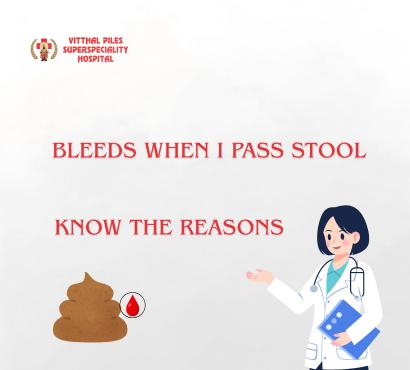
Seeing blood after passing stool can be frightening. For many people, it comes as a complete surprise. You may notice a few drops of bright red blood on the toilet paper, streaks of blood on the stool, or even blood in the toilet bowl. It is natural to feel anxious and wonder whether it is something serious.
Some people ignore the problem because the bleeding stops after a day or two. Others assume it is just piles and start using over-the-counter creams without consulting a doctor. Unfortunately, both approaches can be risky. While bleeding during bowel movements is commonly linked to piles or anal fissures, it can also be caused by other conditions that require timely medical attention.
The important thing to remember is that bleeding while passing stool is a symptom, not a diagnosis. The amount of blood does not always indicate the seriousness of the condition. Even a small amount of bleeding that keeps recurring should not be ignored.
This article explains why bleeding while passing stool occurs, the most common causes, warning signs that need immediate attention, available treatment options, and when it is advisable to seek medical care.
No. Although piles are one of the most common causes of rectal bleeding, they are certainly not the only reason. Several conditions affecting the anal canal, rectum, or lower digestive tract may result in blood during or after bowel movements.
Understanding the possible causes is important because the treatment varies depending on the underlying problem. Assuming that every episode of rectal bleeding is due to piles may delay the diagnosis of other medical conditions.
The colour of the blood can sometimes provide useful information about where the bleeding is coming from.
Fresh, bright red blood usually indicates bleeding from the lower part of the digestive tract, such as the anus or rectum. It is commonly seen in conditions like piles and anal fissures.
Dark red blood may suggest bleeding from higher up in the colon and should always be evaluated by a doctor.
Black stools can indicate bleeding from the upper digestive tract, such as the stomach or small intestine. This requires prompt medical assessment.
Although colour provides clues, it cannot confirm the exact diagnosis. A medical examination is still necessary.
Piles are enlarged veins in the anal canal that can bleed when irritated during bowel movements. Bleeding from piles is usually painless and appears as bright red blood on the toilet paper or in the toilet bowl.
Other symptoms may include:
In many cases, bleeding occurs because hard stools rub against the swollen veins.
An anal fissure is a small tear in the lining of the anal canal. Unlike piles, fissures usually cause severe pain during and after passing stool. Many patients describe the pain as sharp or burning. Bleeding is generally small in quantity but may recur if constipation continues.
Chronic constipation itself can contribute to rectal bleeding. Hard stools stretch the anal canal, increasing the risk of both piles and fissures. Repeated straining places pressure on the blood vessels around the rectum, making bleeding more likely. Preventing constipation is therefore one of the most effective ways to reduce the risk of recurring anorectal problems.
An anal fistula usually develops after an infection near the anus. Although bleeding is not always the main symptom, some patients notice blood mixed with pus or discharge.
Other symptoms include:
If these symptoms are present, seeking evaluation at a fistula treatment hospital in Pune can help identify the underlying condition and ensure timely treatment.
Certain digestive disorders can also lead to rectal bleeding. These conditions are often associated with:
Unlike piles, these conditions affect the intestines and require specialised medical evaluation.
Many people hope that bleeding will stop on its own, especially if it happens only once. In some cases, a minor fissure caused by passing a hard stool may heal naturally with adequate hydration, dietary fibre, and proper bowel habits. However, repeated episodes of bleeding while passing stool should never be ignored.
Even if the amount of blood appears small, recurring bleeding may indicate an ongoing condition that requires medical attention. Waiting too long can result in worsening symptoms, anaemia due to repeated blood loss, or delayed diagnosis of conditions that are easier to treat in their early stages.
You may observe your symptoms for a short period if:
During this time, focus on increasing fibre intake, drinking enough water, avoiding constipation, and reducing straining while passing stool. If the bleeding returns, do not continue self-treatment without consulting a doctor.
Although occasional bleeding after passing a hard stool may not always indicate a serious condition, there are situations where delaying medical attention can make the problem worse. Many anorectal disorders become easier to treat when diagnosed early, which is why recognising warning signs is essential.
Seek medical advice without delay if you notice:
These symptoms should never be ignored, as they may indicate conditions that require medical treatment rather than home remedies.
Many people postpone visiting a doctor because they feel embarrassed or assume the examination will be uncomfortable. In reality, diagnosing the cause of rectal bleeding is usually a quick and straightforward process.
During your consultation, the doctor will ask questions about:
A gentle physical examination often helps identify external piles, fissures, or signs of infection. If required, your doctor may recommend investigations such as anoscopy, sigmoidoscopy, or colonoscopy to examine the rectum and lower intestine more closely. These tests help confirm the diagnosis and rule out other conditions that can also cause rectal bleeding.
The most effective treatment begins with identifying why the bleeding is happening. Since several conditions can produce similar symptoms, there is no single treatment that works for everyone.
Early-stage piles often improve with conservative treatment. Doctors usually recommend:
When piles continue to bleed despite these measures or become larger and prolapse, your doctor may discuss minimally invasive procedures. Depending on the severity of the condition, laser treatment for piles in Pune in Pune may be recommended as an advanced treatment option. Laser procedures are designed to minimise tissue damage and are often associated with faster recovery for suitable patients.
Treatment focuses on allowing the tear to heal naturally while preventing further injury. This usually includes:
Most acute fissures heal successfully when treated early.
Unlike piles or fissures, an anal fistula rarely heals on its own. It generally requires specialised medical evaluation and appropriate treatment. Delaying care may increase the risk of repeated infections and discomfort.
Healthy bowel habits play an important role in preventing recurring anorectal problems. Even after treatment, maintaining these habits can reduce the chances of symptoms returning.
Include foods such as:
Fibre keeps stools soft and reduces excessive straining.
Adequate hydration helps fibre work effectively and prevents hard stools. Most adults benefit from drinking sufficient water throughout the day unless advised otherwise by their doctor.
Many people spend unnecessary time using mobile phones while sitting on the toilet. This increases pressure on the veins around the rectum and may worsen piles. Try to complete bowel movements without prolonged sitting or excessive straining.
Regular walking, stretching, cycling, swimming, or yoga supports healthy digestion and helps prevent constipation. Even 30 minutes of moderate exercise most days of the week can improve bowel function.
Ignoring the urge to pass stool allows it to become harder and drier. Developing a regular bowel routine can significantly reduce the risk of constipation and bleeding.
Although not every condition can be prevented, many anorectal problems are linked to lifestyle habits that are within our control. Simple preventive measures include:
Small lifestyle improvements often have a significant impact on long-term digestive and bowel health.
While occasional bleeding may resolve with lifestyle improvements, recurring symptoms should never be dismissed without medical evaluation. It is advisable to consult a doctor if:
Rather than assuming every episode is due to piles, seeking advice from an experienced proctologist in Pune can help identify the exact cause and ensure that you receive the most appropriate treatment. If your symptoms continue despite medication or lifestyle changes, consulting a piles specialist in Pune can help determine the stage of the condition and discuss suitable treatment options based on your individual needs.
Seeing blood while passing stool can be alarming, but ignoring it is rarely the right approach. Although piles are among the most common causes of rectal bleeding, they are not the only possibility. Conditions such as anal fissures, fistulas, infections, inflammatory bowel disorders, and other colorectal conditions can present with similar symptoms.
The encouraging news is that many of these conditions respond well to timely diagnosis and appropriate treatment. Paying attention to early symptoms, maintaining healthy bowel habits, and seeking medical advice when bleeding recurs can help prevent complications and improve your overall quality of life.
Instead of relying solely on home remedies or assuming the problem will disappear on its own, consider rectal bleeding as an important signal from your body. Early consultation and the right treatment can make recovery smoother and provide lasting relief.
No. Although piles are a common cause, bright red blood may also occur due to anal fissures, infections, or other conditions affecting the rectum. A proper medical evaluation is the best way to determine the exact cause.
Yes. Passing hard stools can cause small tears in the anal canal or irritate swollen hemorrhoids, leading to bleeding. Increasing fibre intake, drinking enough water, and avoiding straining can help reduce the risk.
If the bleeding happened only once after passing a hard stool and does not recur, it may improve with dietary and lifestyle changes. However, if bleeding returns, increases, or is accompanied by pain, swelling, fever, or discharge, consult a doctor promptly instead of continuing self-treatment.
Our specialists are here to help you with safe and advanced treatment for piles and other anorectal conditions.
Book Appointment.png)

.png)